
UNDERSTANDING PRIVATE COPYING LEVIES IN NIGERIA: WHERE THE MONEY COMES FROM AND WHY IT MATTERS
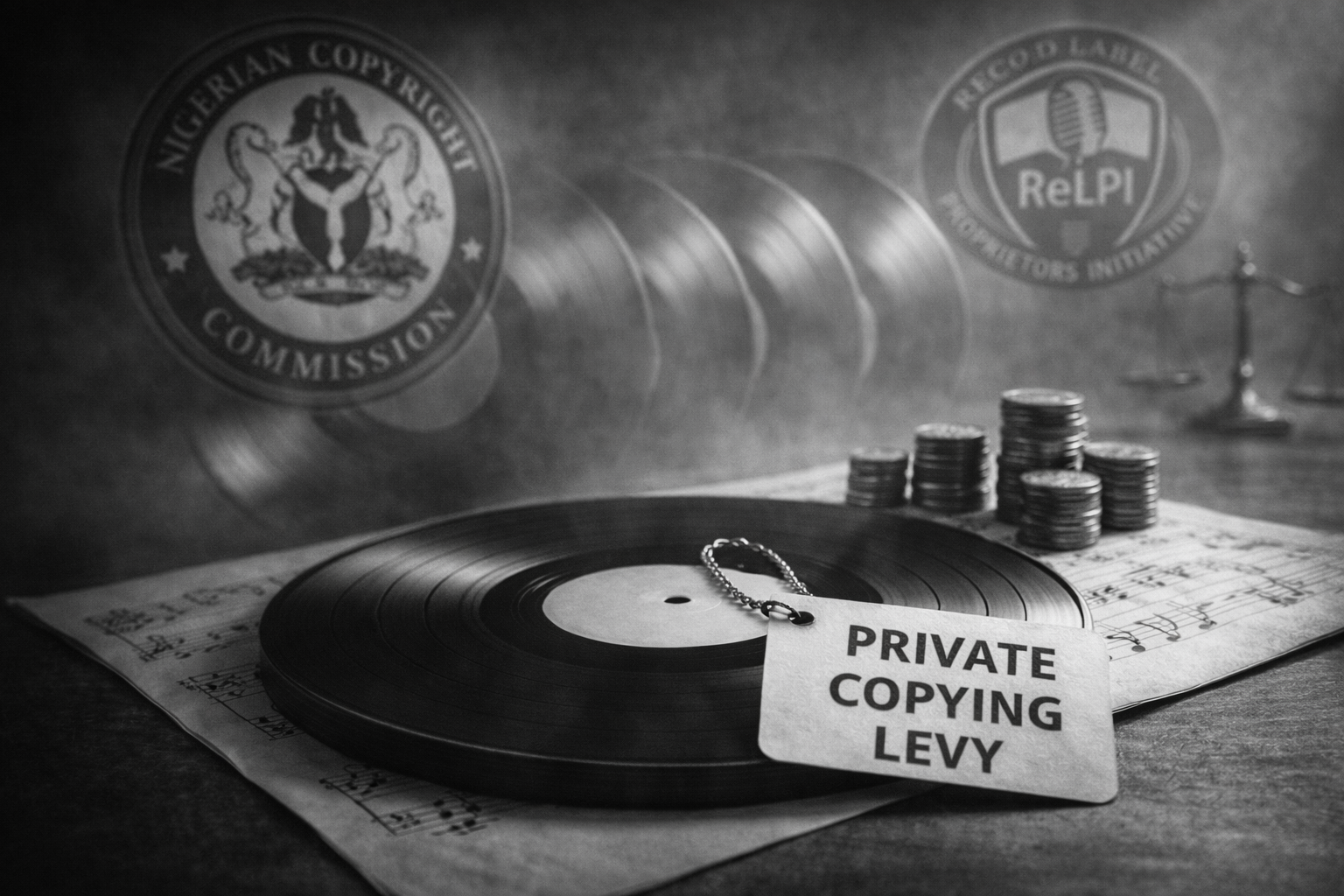
Recent public disagreements between major Nigerian record labels operating under the Record Label Proprietors Initiative (ReLPI), and the Nigerian Copyright Commission (NCC) have drawn attention to a lesser-known part of Nigeria’s copyright system: private copying levies. For many members of the public, the debate raises a simple question, what exactly are private copying levies, where do they come from, and who are they meant to benefit?
What are Private Copying levies?
Private copying levies are statutory fees placed on devices and storage media that can be used to copy copyrighted works for personal use, such as smartphones, computers, external hard drives, and memory cards. The idea is straightforward, while the law allows individuals to make limited private copies of music, films, and other works, creators and rights holders are entitled to compensation for that copying.
The Legal Basis for Private Copying Levies in Nigeria
Under Nigeria’s current copyright framework, private copying is recognized as an exception to copyright infringement, but not a free one.
The Nigerian Copyright Act empowers the relevant authority, through the NCC to approve the imposition of levies on eligible devices and media, Collect those levies; and ensure that the funds are distributed to the appropriate categories of rights holders, usually through approved collective management structures.
This aligns Nigeria with international copyright norms found in many jurisdictions across Europe, Africa, and beyond.
Who are the Beneficiaries?
Private copying levies are intended to compensate multiple layers of rights holders, including:
- Songwriters and composers,
- Recording artists and performers,
- Record labels (as owners of sound recording rights)
- Audiovisual creators and producers (where applicable)
It is worthy to note that, it is impractical to track which specific song or film was privately copied, the funds are usually distributed collectively, based on usage data, market share, or agreed distribution formulas.
This is why Collective Management Organizations (CMOs) and industry bodies often play a central role in disbursement.
Why is there a Dispute?
The current disagreement centers on how these funds are disbursed and who benefits from them, raising important questions about transparency, fairness, and accountability in Nigeria’s copyright system.
As Nigeria’s creative economy grows and content consumption becomes increasingly digital, public understanding of private copying levies is essential. These funds exist to balance consumer freedoms with fair compensation for creators, and how they are managed matters to everyone in the creative value chain.