
UNDERSTANDING RETENTION PERIOD IN MUSIC PUBLISHING AGREEMENTS
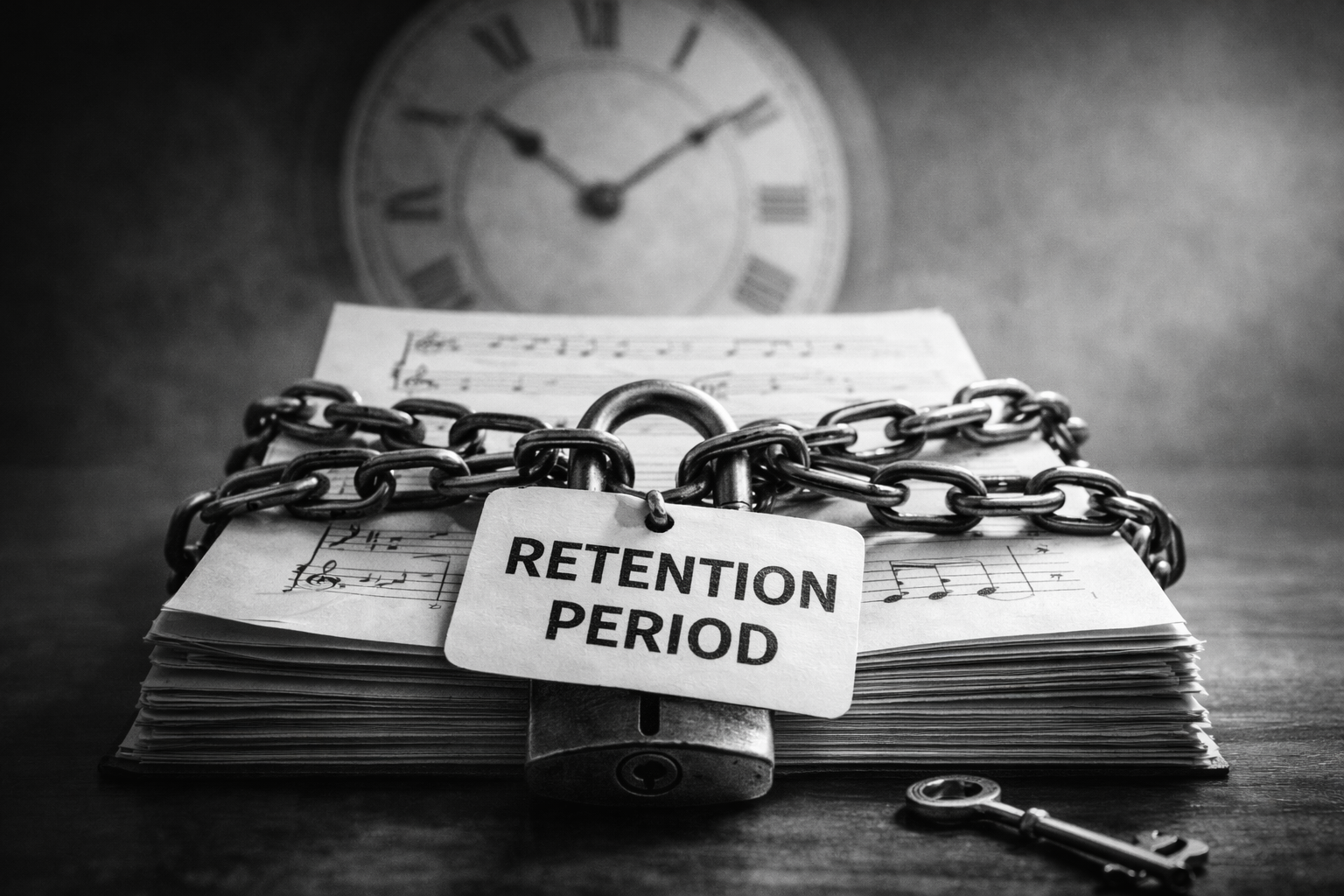
Publishing agreements are a critical part of the music business, yet one clause frequently overlooked by songwriters, singers, and producers is the retention period.
Many creatives focus on advances, royalty splits, and the overall duration of a deal. Far fewer examine how long a publisher continues to control their compositions after the agreement itself has ended. This oversight can have significant long-term legal and commercial consequences.
What Is a Retention Period in a Publishing Agreement?
A retention period refers to the length of time a music publisher continues to own or control a songwriter’s compositions after the contractual term of the publishing agreement has expired. It is important to distinguish between two separate timelines:
- The Term of the Agreement: how long the songwriter is signed to the publisher.
- The Retention Period: how long the publisher retains rights over songs delivered during that term.
These timelines operate independently and should never be confused. For example, a four-year publishing agreement with an eight-year retention period means the publisher may control the songs created during those four years for a total of twelve years. Even though the active contractual relationship ends after four years, control over the compositions continues for an additional eight years.
During this period, the songwriter generally cannot:
- Transfer the songs to another publisher;
- Independently license or exploit the compositions; or
- Exercise full commercial control without the publisher’s involvement.
Why the Retention Period Matters
In music publishing, control determines opportunity. The party controlling publishing rights typically has authority to:
- License compositions;
- Approve synchronization placements (film, TV, advertising, and gaming);
- Negotiate commercial deals;
- Administer and collect publishing income worldwide.
A lengthy retention period allows the publisher to continue exercising these rights long after the creative relationship has ended. This can directly affect a songwriter’s bargaining power, particularly as their career grows and market value increases.
Writers sometimes discover that their most successful works remain tied to earlier agreements, limiting their ability to renegotiate improved terms or restructure their catalog.
Common Types of Retention Structures
Retention clauses are not uniform. Publishing agreements may adopt different structures, including:
1. Fixed Retention Period: The publisher retains rights for a specified number of years following the agreement’s expiration - commonly five, seven, or ten years.
2. Copyright-Term Retention: Some agreements grant rights for the full copyright duration, which in many jurisdictions lasts for the life of the author plus seventy years. This effectively transfers long-term control across generations.
3. Rolling Retention Period: Each composition carries its own retention timeline beginning from the date the song is delivered. In practice, this structure can extend publisher control far beyond what the songwriter initially anticipates.
Why Publishers Request Retention Rights
Retention periods are not arbitrary. Publishers typically invest substantial resources into developing and exploiting a songwriter’s catalog, including:
- Payment of advances;
- Funding recording or writing sessions;
- Pitching songs to artists and producers;
- Securing licensing and synchronization opportunities;
- Administering global royalty collection.
Because compositions may take years to generate meaningful revenue, retention provisions allow publishers sufficient time to recoup investments and realise commercial returns.
While publishers seek protection for their investment, retention periods must be balanced against a songwriter’s long-term ownership interests.
An excessively long retention period may:
- Restrict catalog restructuring;
- Delay opportunities to change representation;
- Limit negotiation leverage as career value increases; and
- Prevent creators from fully benefiting from later success.
Understanding when and how control reverts to the songwriter is therefore essential.
Key Questions Creatives Should Ask Before Signing
Before entering a publishing agreement, creatives should clearly understand:
- How long does the retention period last?
- When do rights revert to the songwriter?
- Are there early reversion or buy-back options?
- Does each song have a separate retention timeline?
- What level of control remains with the publisher after the term ends?
These questions can significantly affect both present income and long-term catalog ownership.
A publishing agreement does not end when the contractual term expires. In many cases, the real impact continues through the retention period, when control over compositions may remain with the publisher for years or even decades.
Understanding this clause is essential to protecting creative rights, commercial flexibility, and long-term legacy. For songwriters and producers, clarity around retention periods is not merely a legal detail; it is a strategic decision that shapes the future value of their work.