

UNDERSTANDING RETENTION CLAUSES AND WHAT THEY MEAN FOR ARTISTES AND PUBLISHERS
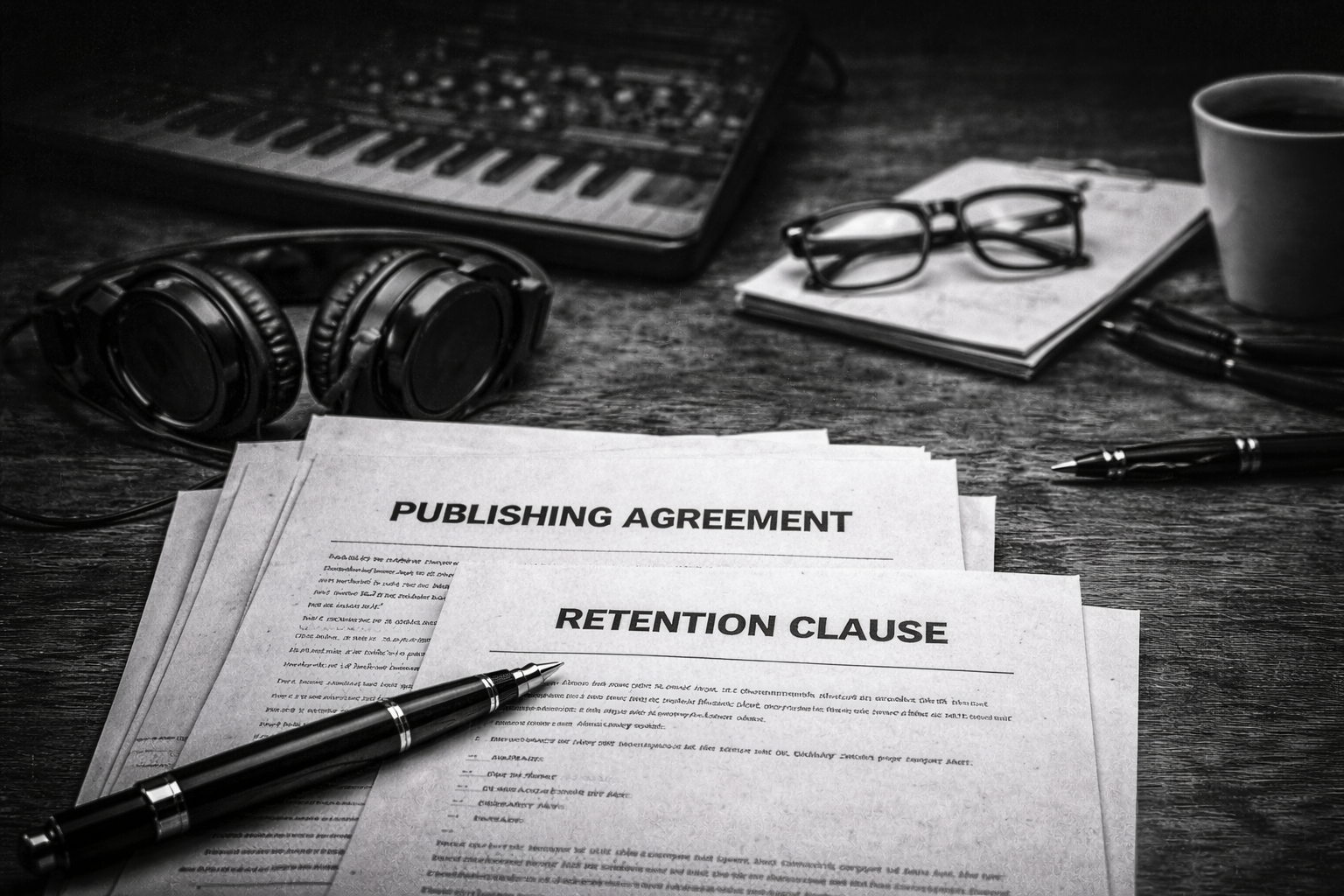
A music publishing agreement defines how a songwriter’s compositions are owned, administered, and monetised. One clause that often requires careful attention is the retention clause.
A retention clause specifies how long a publisher may continue to administer and control songs written under a publishing agreement after the contract term has ended. In other words, it determines when the rights in those compositions may revert to the songwriter.
Retention Clauses and Artists
For artists and songwriters, the retention period directly affects long-term control over their catalogue. During this period, the publisher may continue to license the songs, collect royalties, and administer the works according to the royalty structure agreed in the publishing agreement.
Until the retention period expires, the songwriter typically cannot transfer those works to another publisher or administer them independently.
Retention Clauses and Publishers
From a publisher’s perspective, retention clauses allow them to continue exploiting the works created during the agreement. This may include ongoing licensing, administration, and royalty collection for songs developed during the contractual relationship.
The retention period therefore provides certainty regarding how long the publisher may benefit from the catalogue generated under the deal.
Why Retention Clauses Matter
For artists and songwriters, retention clauses play a significant role in determining when they regain full control of their works. If the retention period is lengthy, the artist may remain tied to the publisher long after the commercial relationship has ended.
This can affect future publishing arrangements, licensing opportunities, and the long-term value of the catalogue. Understanding the retention clause allows artists to assess whether the duration aligns with their career plans, bargaining power, and long-term catalogue strategy.
Retention clauses determine how long publishing rights remain with a publisher after a publishing deal expires. Artists should clearly understand when control of their works will revert, while publishers should ensure the retention period reflects their role in developing and exploiting the catalogue.
Well-drafted retention clauses help reduce disputes and support long-term professional relationships in music publishing.