

TRADEMARKS IN POP CULTURE: THE BEYONCÉ "BLUE IVY" STORY.
Trademarks are often seen as business tools - logos, brand names, and slogans used by companies to stand out in the market. But today, trademarks go far beyond corporations. They now sit at the center of music, entertainment, and pop culture, where a name can carry as much value as a product.
And few examples show this better than the story of Beyoncé and the name Blue Ivy.
When a Name Becomes a Brand
A trademark is simply a word, phrase, symbol, or design that the public uses to identify the source of goods or services. Think of Nike’s “swoosh” or Coca-Cola’s name.
In entertainment, the concept goes deeper. An artist’s name, stage identity, and catchphrase can all function as valuable intellectual property.
The Blue Ivy Trademark Dispute
When Beyoncé and Jay-Z attempted to trademark the name Blue Ivy Carter, it seemed straightforward. But there was a problem.
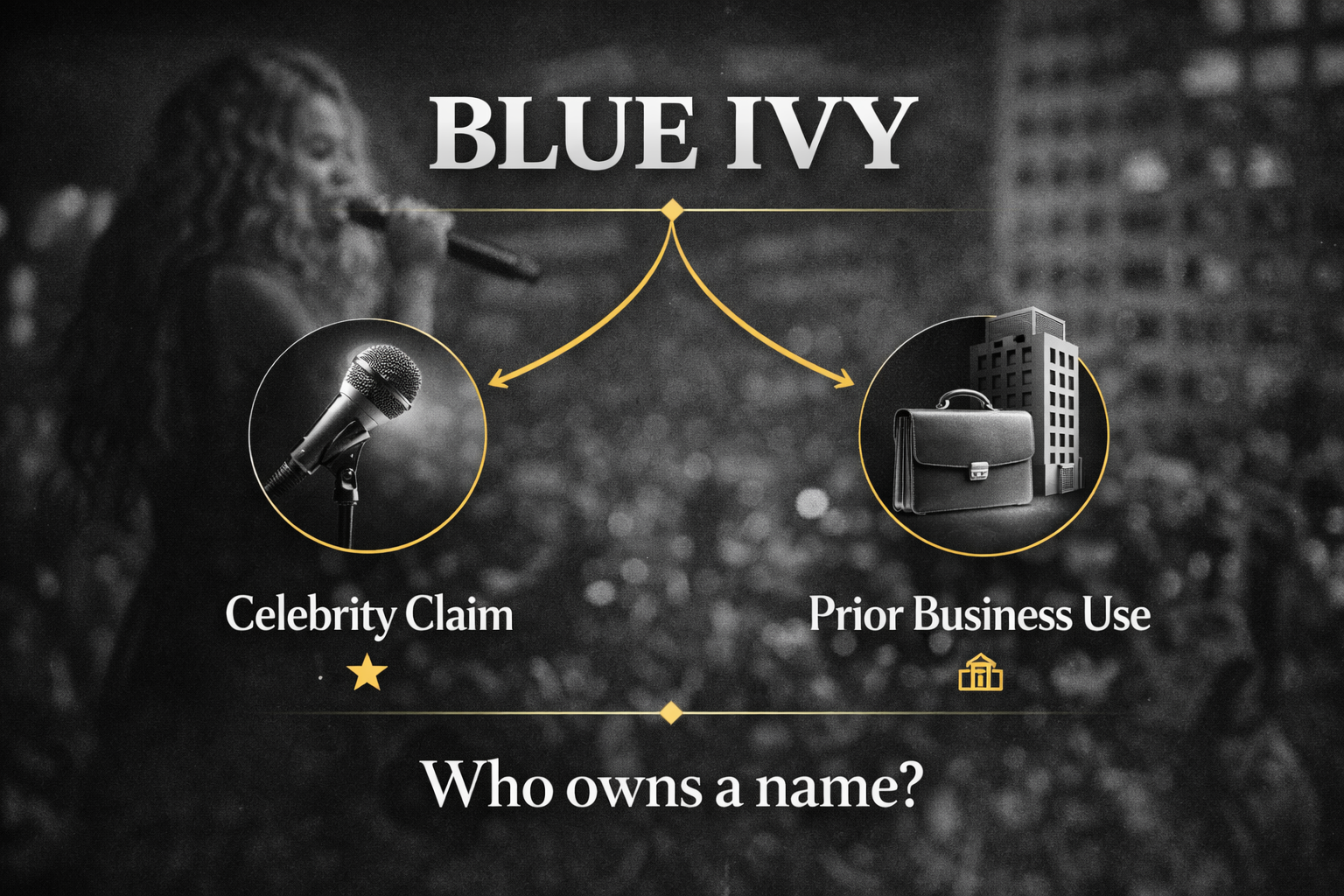
A company called Blue Ivy Events had already been using the name for its wedding planning business years before.This led to a legal dispute centered on a key trademark principle: Who used the name first in commerce?
Despite their global fame, Beyoncé and Jay-Z faced challenges securing exclusive rights because trademark law does not automatically favor celebrity status, rather it prioritizes prior use and likelihood of confusion.
Trademark rights are not about who is more famous. They are about:
- Who used the mark first
- How it is used in commerce
- Whether the public could confuse the two
In practice, this means:
- A smaller business can have stronger rights
- A celebrity cannot simply claim a name because of popularity
Trademarks in Pop Culture Today
Cases like this highlight how trademarks now operate within culture, not just commerce. From artists to influencers, people are increasingly treating their identity as a brand asset. This includes:
- Artist names
- Album titles
- Catchphrases
- Even viral internet phrases
In many ways, trademarks determine who controls and profits from cultural relevance.
Why This Matters
1. Trademarks Protect Identity
Public figures and creatives use trademarks to control how their names and brands are used and to prevent exploitation.
2. Timing Is Critical
If someone else is already using a name, they may have stronger rights even against a global celebrity.
3. Culture Has Commercial Value
In today’s digital world, names and phrases spread quickly and whoever owns the rights often controls the monetization.
For creatives, entrepreneurs, and entertainers, a trademark is more than paperwork. It is a strategic asset.
Whether you are building a brand, launching a business, or growing a public identity, securing your trademark early helps you control how your name exists in the world.
Because as the Blue Ivy story shows:
Your name is your power and in today’s landscape, it pays to protect before someone else does.