
UNDERSTANDING THE ROLE OF PERFORMING RIGHTS ORGANIZATIONS (PRO) IN MUSIC PUBLISHING
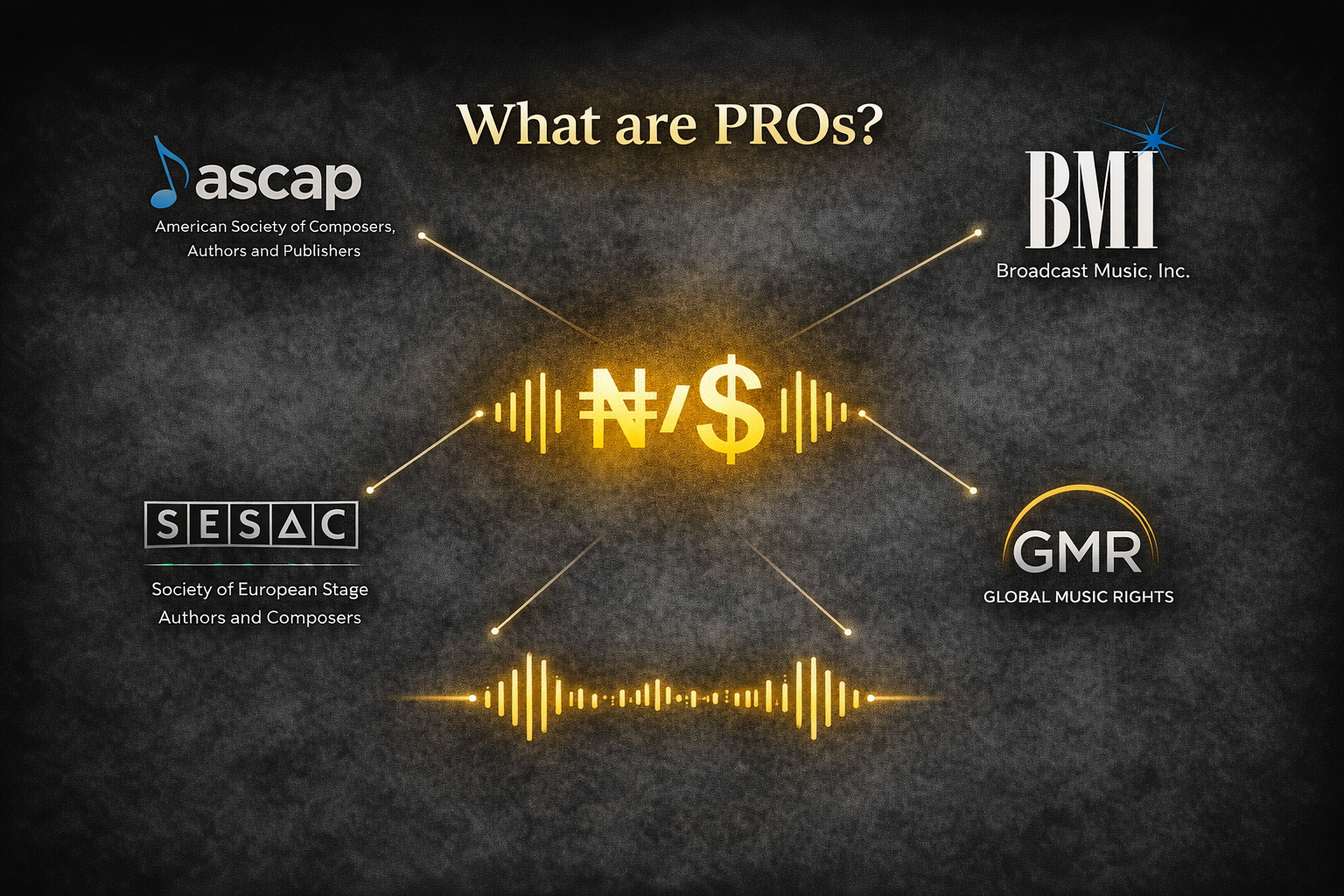
In today’s music industry, music travels faster and further than ever before, from radio to streaming platforms to public spaces across the world. But behind every public play of a song is a critical question:
Who ensures the creator gets paid?
That responsibility largely falls to Performing Rights Organizations (PROs), one of the most important, yet often misunderstood, players in music publishing.
What Is a PRO?
A Performing Rights Organization (PRO) is an entity that helps songwriters, composers, and music publishers collect royalties whenever their music is publicly performed. Public performance includes:
- Radio broadcasts
- TV shows and commercials
- Live concerts
- Streaming platforms
- Bars, clubs, hotels, and restaurants
- Background music in public spaces.
In simple terms: When your song is played publicly, a PRO helps ensure you get paid.
Without PROs, every business that plays music would need to:
- Contact individual songwriters
- Negotiate licenses
- Track usage manually
That system would be practically impossible. PROs solve this by acting as a central licensing and royalty collection system.
Key Roles of PROs in Music Publishing
1. Licensing the Public Use of Music
PROs issue licenses to businesses and platforms that use music. These include:
- Radio and TV stations
- Streaming platforms like Spotify, Apple Music, and YouTube
- Event venues, gyms, and clubs
- Restaurants, hotels, and retail stores
Most users obtain a blanket license, which allows them to play any music in the PRO’s catalogue without negotiating individual deals. This simplifies access while ensuring creators are compensated.
2. Collecting Performance Royalties
Once music is played publicly, PROs track its usage and collect royalties from licensed users. Examples:
- Your song plays on radio → you earn
- A band performs your song live → you earn
- Your track is used in a hotel playlist → you earn
These are known as performance royalties.
3. Distributing Royalties
After collection, PROs distribute royalties to writers (songwriters and composers) and publishers (copyright owners or administrators). Typically, royalties are split 50/50 between the writer’s share and the publisher’s share.
If you don’t have a publisher, you can still earn both shares but only if your works are properly registered.
4. Song Registration and Metadata Management
Before any royalties can be paid, songs must be registered with a PRO. This registration includes:
- Song title
- Contributor names
- Ownership splits
- Publisher information
Accurate metadata is critical. In practice, missing or incorrect data is one of the biggest reasons artists lose money.
5. Monitoring and Tracking Usage
PROs use technology to track where and how music is used, including:
- Digital fingerprinting
- Cue sheets (for film/TV)
- Radio logs
- Audio recognition systems
This tracking is especially important in digital environments where music usage is massive and constant.
Why PROs Matter
PROs sit at the intersection of creativity, law, and commerce. They ensure that the value created by music is actually captured and paid for. Without them:
- Royalty collection would be fragmented
- Enforcement would be weak
- Many creators would go unpaid
In an industry where music moves globally and instantly, PROs remain a foundational pillar of music publishing. They are the bridge between: Creating music and getting paid for it.
For any songwriter, composer, or rights holder, understanding how PROs work is not optional, it is essential.