
ARE TATTOOS COPYRIGHTABLE? WHITMILL V WARNER BROS - THE CASE THAT SPARKED A LANDMARK COPYRIGHT FIGHT
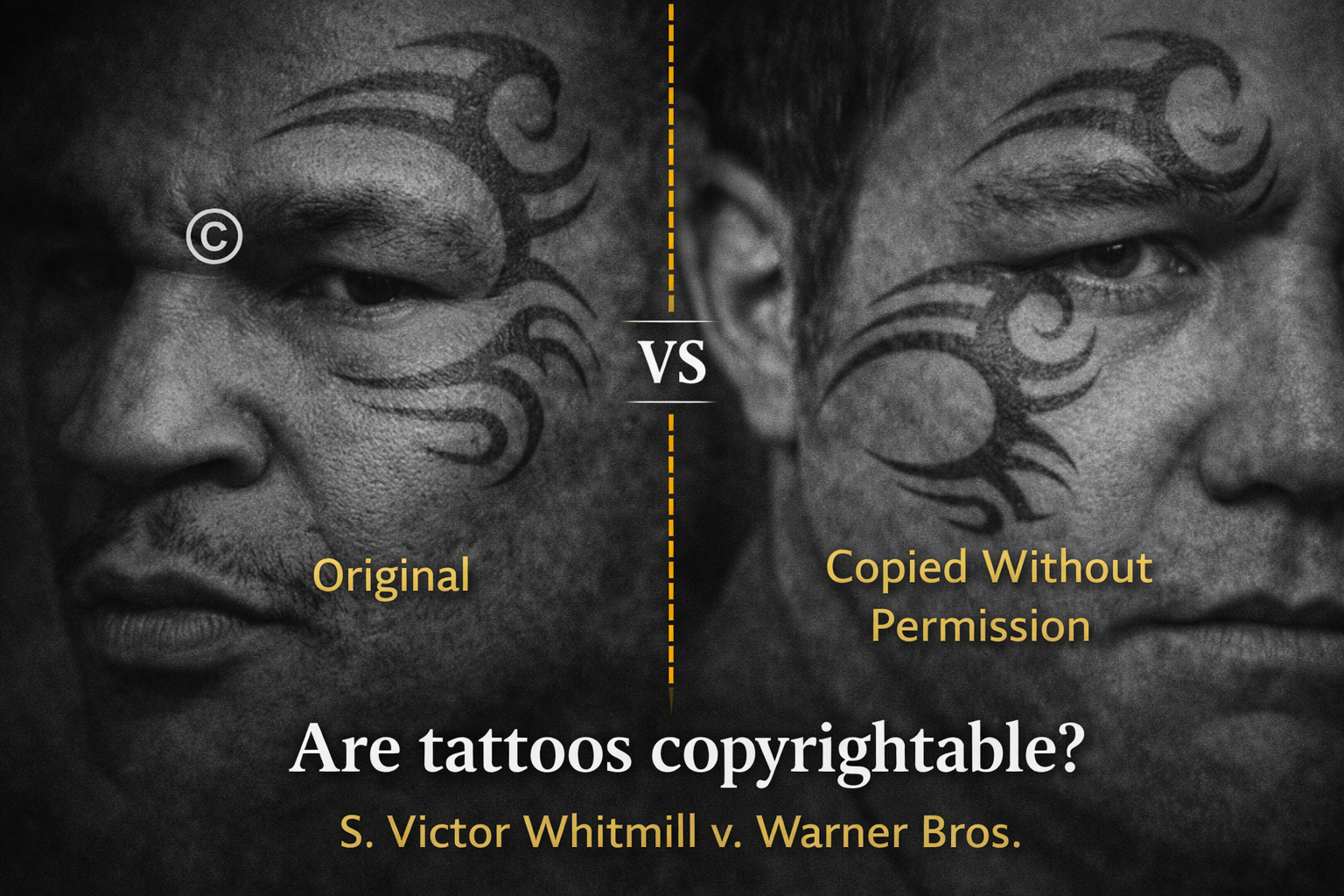
When people think about copyright law, tattoos are rarely the first thing that comes to mind. But in 2011, a dispute over Mike Tyson’s iconic facial tattoo nearly delayed the release of a major Hollywood film.
The case of Whitmill v. Warner Bros. Entertainment Inc. raised a surprisingly complex question: Can a tattoo be protected by copyright law?
In 2003, tattoo artist S. Victor Whitmill created and inked the now-famous tribal face tattoo on Mike Tyson. Years later, Warner Bros. released The Hangover Part II. In the film, actor Ed Helms wakes up with a tattoo identical to Tyson’s, clearly intended as a comedic reference.
Whitmill was not amused. He filed a lawsuit claiming:
- The tattoo design was his original artwork
- Warner Bros. had copied it without permission
- The use constituted copyright infringement
Whitmill didn’t just seek damages. He asked the court to block the release of the film entirely. And here’s where it gets interesting.
The court acknowledged that Whitmill had a “strong likelihood of success” in proving copyright infringement. This was significant because it recognized tattoos as potentially copyrightable works of art.
However, the court ultimately refused to delay the film’s release. Why?
Because stopping a major Hollywood premiere would have caused massive financial losses to the studio.
Instead of continuing to trial, the parties reached a confidential settlement. While the exact terms were not disclosed:
- Whitmill was reportedly compensated
- Later versions of the film included digital alterations to the tattoo
This quietly reinforced the legal risk without a final court ruling.
Why This Case Matters
This case changed how the entertainment industry thinks about tattoos.
1. Tattoos Can Be Copyrighted
A tattoo is an original artistic work once it is created and fixed even if it exists on someone’s body.
2. Ownership Doesn’t Automatically Transfer
Just because a tattoo is on someone’s skin does not mean they own the copyright. The artist may still retain rights in the design.
3. Using Tattoos Requires Permission
Reproducing a tattoo in films, video games, or merchandise can expose companies to infringement claims.
Industry Impact
Since this case, studios, brands, and game developers have become far more cautious. Today, it is standard practice to:
- Clear rights to visible tattoos
- Obtain licenses from tattoo artists
- Modify designs where necessary
What once seemed like a minor detail is now a serious legal consideration.
The Whitmill case shows how far intellectual property law can extend, even onto human skin.
For artists, it reinforces the importance of owning and protecting creative work.
For businesses and creatives, it’s a clear reminder: If it’s original, it’s protected and permission matters.